Tampilkan postingan dengan label media. Tampilkan semua postingan

Jumat, 11 April 2014


Image from Dawn of the Dead (George Romero, 1978)

Film Studies For Free today recommends an event at one of its favourite, and one of the most original, film and media studies websites -- In Media Res -- which is just concluding a special theme week devoted to Zombies! Below are the direct links to all the fun stuff, and below those you can find more information about the ethos and practicalities of the marvellous In Media Res site.

Eric Hamako (University of Massachusetts) presents: “The Yellow Peril rises from the grave…to get your White women!" Orientalist themes in zombie stories, Monday, September 28, 2009

Cathy Schlund-Vials (Univ. of Connecticut), Racism, Postcolonialism, and Neocolonial Zombies: Resident Evil 5, Tuesday, September 29, 2009

Kim Paffenroth (Iona College), Dawn of the Dead (1978): Zombies and Human Nature, Wednesday, September 30, 2009

Elizabeth McAlister (Wesleyan Univ.), “Obama, Zombies, and Black Male Secular Messiahs", Thursday, October 1, 2009

ABOUT IN MEDIA RES

In Media Res is dedicated to experimenting with collaborative, multi-modal forms of online scholarship.

Each day, a different scholar will curate a 30-second to 3-minute video clip/visual image slideshow accompanied by a 300-350-word impressionistic response.

We use the title "curator" because, like a curator in a museum, you are repurposing a media object that already exists and providing context through your commentary, which frames the object in a particular way.

The clip/comment combination are intended to both introduce the curators work to the larger community of scholars (as well as non-academics who frequent the site) and, hopefully, encourage feedback/discussion from that community.

Theme weeks are designed to generate a networked conversation between curators. All the posts for that week will thematically overlap and the participating curators each agree to comment on one anothers work.

Our goal is to promote an online dialogue amongst scholars and the public about contemporary approaches to studying media.

In Media Res provides a forum for more immediate critical engagement with media at a pace closer to how we typically experience media

In Media Res is a publication of MediaCommons. MediaCommons is a strong advocate for the right of media scholars to quote from the materials they analyze, as protected by the principle of "fair use." If such quotation is necessary to a scholars argument, if the quotation serves to support a scholars original analysis or pedagogical purpose, and if the quotation does not harm the market value of the original text -- but rather, and on the contrary, enhances it -- we must defend the scholars right to quote from the media texts under study.

For more information, please contact In Media Res’ coordinating editor, Avi Santo at asanto@odu.edu
Read More..

Rabu, 26 Maret 2014

Teaser image, courtesy of Warner Brothers, from Harry Potter and the Deathly Hallows, Part 2 out on July 15  (David Yates, 2011). Read Debora Luis paper on Harry Potter: The Exhibition.

Today, Film Studies For Free brings you links to film and moving image related papers from the conference proceedings of the seventh annual Media in Transition conference, which will take place next week, May 13-15, 2011, at the Massachusetts Institute of Technology. 

Heres the conferences mission statement:
Has the digital age confirmed and exponentially increased the cultural instability and creative destruction that are often said to define advanced capitalism? Does living in a digital age mean we may live and die in what the novelist Thomas Pynchon has called “a ceaseless spectacle of transition”? The nearly limitless range of design options and communication choices available now and in the future is both exhilarating and challenging, inciting innovation and creativity but also false starts, incompatible systems, planned obsolescence. How are we coping with the instability of platforms? 
FSFF particularly liked "“Make Any Room Your TV Room:” Media Mobility, Digital Delivery, and Family Harmony" by film and media studies scholar and blogger extraordinaire Chuck Tryon, film and television scholar and media studies blogger extraordinaire Michael Z. Newmans paper The Television Image and the Image of the Television", and "Who Told You You Were Special Edition? The Commercialization of the Aura" by Justin Mack.

There are other great papers online connected to
the conference theme of unstable platforms and the experience of mediatic transitions that dont treat moving image topics and you can access those here.

Read More..

Jumat, 07 Maret 2014

Image from Gadar: Ek Prem Katha (Anil Sharma, 2001). 

Film Studies For Free just came across a really good e-journal that it hadnt bumped into before: Journal of the Moving Image, an annual publication of the Department of Film Studies, Jadavpur University, Kolkata. 

It was launched in print format in 1999, but its print and online versions now co-exist. As its mission statement puts it,
JMI seeks to represent critical work on the state of contemporary screen cultures. There are many regions in the world with large viewing populations, often with vast production infrastructures for film and television; but corresponding institutions or forums for critical engagement with such audio-visual regimes are still highly inadequate. JMI seeks to address a broad set of issues ranging from formal properties of the moving image to the social foundation of its production, transmission and reception. There will be a special focus on India and South Asia, and on issues of transnational media transactions, but we would like to offer a wider range of discussion on film and television from various parts of the world made from different perspectives.
FSFF wanted to share its contents with you promptly, so direct links to all items so far online are pasted in below, with the most recent issue first. The first three issues of JMI are also being prepared for online publication. 

There are some excellent items here (you might try out Ravi Vasudevans The Meanings of ‘Bollywood’ just for starters). So FSFF heartily recommends that you subscribe to JMI ready for its next issue in December. 

(Also, please check out, if you havent yet, FSFFs own related entry: "Bollywood" for Beginners and Beyond: Introductions to Popular Hindi Cinema Studies)

Read More..

Selasa, 04 Maret 2014

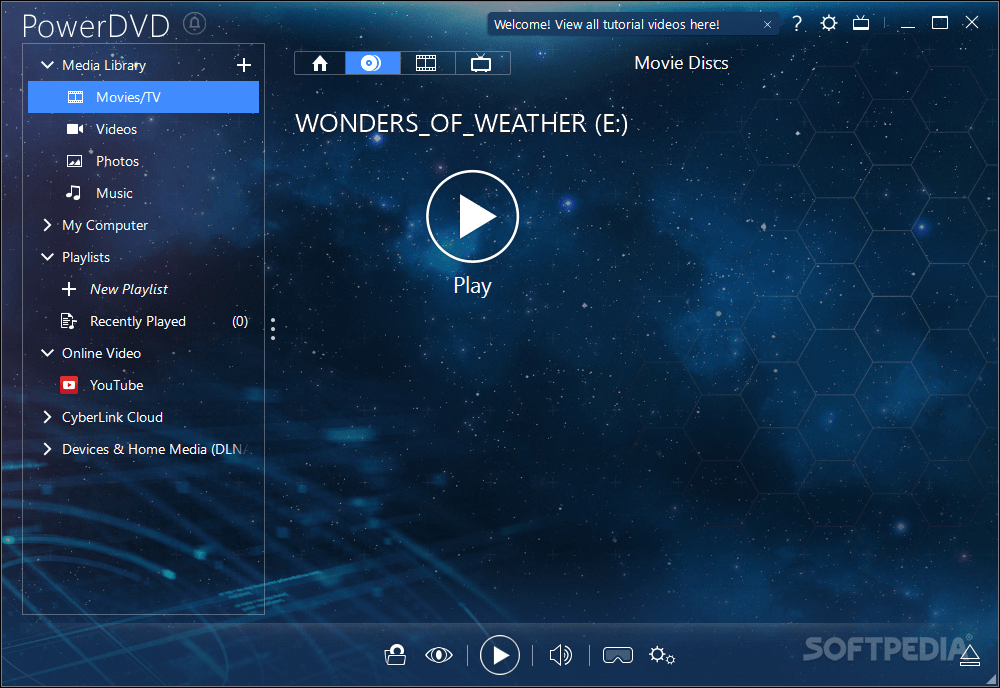
Release of late , PowerDVD 10 seems to be the most advanced and sophisticated Media player till date.  I have been using PowerDVD to play  DVDs and other media since its version 6. Unfortunately it is not a freeware but i was compelled to post about its new features and capabilities because you dont need any other media player in your PC . PowerDVD 10 can now paly Matroska(mkv) ,  Flash video (flv) . A major improvement over its previous releases. Most remarkable addition is TrueTheater 3D technology. which enables you to play DVDs/BlueRay movies in 3D instead of 2D rendering. I think no other contemporary player supports 3D yet.
And also  PoweDVD user interface now includes a media browser with which you can browse for media files (Vedio/Audio) and play instantly or add to a playlist just by clicking a button and last but not least it allows you to upload your selected media to YouTube.

Some Screenshots 


Feauters and System requirments

Brilliant Blu-ray Movies:
Experience Blu-ray movies the way that only PowerDVD can offer: simply unbeatable quality. Optimized for the latest hardware acceleration technologies from Intel, NVIDIA and AMD, PowerDVD ensures smoother movie performance. PowerDVD 10 launches your Blu-ray movies up to 4X faster too.

Play DVDs in 3D
3D movie player PowerDVD takes you to new heights of visual excellence for standard DVD content. Featuring advanced TrueTheater 3D technology, PowerDVD converts 2D movies into a spectacular 3D experience. Optimize playback quality for your movie content and hardware.

Upscale DVDs and Videos to HD:
Enjoy better movie playback quality for both your DVDs and video files with TrueTheater HD upscaling technology. DVD and media player PowerDVD lets you output to an HDTV in a quality that looks noticeably sharper and clearer. Optimization for hardware acceleration ensures even smoother results.

Home Theater Music:Supporting the latest music library features of Windows 7, PowerDVD makes it even easier to listen to music from the player you use to enjoy your movies. Create playlists of favorite tunes. Use TrueTheater Surround technology to optimize your audio for home theater and PC hardware. Sounds great!

Movie Reviews and Live Comments:Create movie reviews that other users can read and play using PowerDVD. MovieMarks combine bookmarks and review comments and can be shared online via MoovieLive.com. Meanwhile, Live Comments let you post your opinions to Facebook, Twitter and MoovieLive while your movie is playing.

High Definition Audio Playback:3D and HD movie player PowerDVD lets your ears enjoy the ultimate movie experience too, with support for high-definition audio formats from Dolby Digital and DTS. Support for HDMI 1.3a delivers the purity of lossless HD audio via a single convenient cable to your home theater system.

Enhanced Video Playback:
With PowerDVD home videos can be enhanced using TrueTheater Stabilizer and TrueTheater Noise Reduction to improve quality as you play. As a universal player, PowerDVD now plays even more formats, gives you access to online movie trailers via MoovieLive, and lets you upload files to YouTube.


Requirements:

To play DVDs

· Screen Resolution: 1024 x 768 or 1280 x 1024
· Screen Ratio: 4:3 or 16:9 widescreen
· Intel Pentium 4 2.4 GHz (Pentium 4 3.0 GHz or above recommended)
· AMD Sempron 2600+ 1.6 GHz (Athlon 64 2800+ 1.8GHz or above recommended)
· Memory: for XP: 256 MB, for Vista: 512 MB
· Graphics Card: AGP or PCI Express graphic accelerator supporting DirectX 9.0.
· Sound Card: PCI sound card or on-board audio.
· Optical Drive DVD-ROM, DVD-ROM/CD-RW combo, DVD-R/RW, DVD+RW or DVD-RAM drive for playing VCDs and DVDs.

To play Blu-ray Discs

· Screen Resolution: 1920 x 1080
· Screen Ratio: 16:9 widescreen

Processor:
· Intel: Pentium 4 541 3.2 GHz, Pentium D 840 3.2 GHz, Pentium D 930 3.0 GHz, 935 3.2GHz or 940 3.2 GHz, Core Duo T2400 1.83 GHz, Pentium M 755 2.0 GHz, Core 2 Duo E4300 1.8 GHz, or T5600 1.83 GHz
· AMD: Athlon 64 X2 3800+ 2.0 GHz or 4000+ 2.0 GHz, Turion 64 X2 TL-50 1.6 GHz, TL-52 1.6 GHz or TL-56 1.8 GHz
· Memory: for XP: 512 MB, for Vista: 1 GB
· Hard Disk Space: 150 MB

Graphics Card:
· Intel 965G
· nVidia: GeForce 7600 GT, GeForce 7800 GTX 512, GeForce 7900 GX2, GeForce 7900 GTX, GeForce 7950 GX2, GeForce 8400 series, GeForce 8500 series, GeForce 8600 series, GeForce 8800 series
· ATI: ATI Radeon X1600 series, X1800 series, X1900 series
· Sound Card: PCI sound card or on-board audio
· Optical Drive: Blu-ray Disc drive for playing Blu-ray Discs and DVDs.


Read More..
FOOTER