Tampilkan postingan dengan label new. Tampilkan semua postingan

Kamis, 10 April 2014

Frame grab from Star Wars Episode V: The Empire Strikes Back (Irvin Kershner, 1980), one of the subjects of Film Studies For Frees authors latest videographic film study in her new article Déjà-Viewing? Videographic Experiments in Intertextual Film Studies, which you can find in the newly published issue of Mediascape.
The much awaited Winter 2013 issue of MEDIASCAPE, UCLAs Journal of Cinema and Media, has just been published. There are two very fine articles on historical film archives by Christina Petersen and Bryan Sebok, as well as two excellent columns on related historiographical themes. Meanwhile, the META section boasts some very good, new video essay work by Matthias Stork, Alexandra Schroeder, and Clifford James Galiher and reflections on videographic and other digital film studies practices by great luminaries, such as Yuri Tsivian and Daria Khitrova, alongside those of much more ordinary mortals! Theres also a highly informative interview with filmmaker Thom Andersen and some very interesting reviews to catch up with.

All contents are listed and linked to below. But, also, do check out MEDIASCAPEs occasional, but very high quality blog which publishes between journal issue releases. A good place to start is this entry: Mastering "The Master" by Vincent Brook

MEDIASCAPE, Winter 2013

Editorial by Andy Myers and Andrew Young

Features

Columns


META


Reviews


Read More..

Selasa, 25 Maret 2014


Image from After the Rainbow (2009), a two screen video installation by Soda_Jerk, the Australian artist sisters Dom and Dan Angeloro, as discussed in The Colour of Nothing: Contemporary Video Art, SF and the Postmodern Sublime by Andrew Frost
[C]inema is surely a paradoxical object: its medium-specific possibility seems to have been well and truly overrun by its tendency to intermediality, its fundamental impurity. That is where its true materiality-effect, today, is situated: in the palpable aura of a mise en scène that is always less than itself and more than itself, not only itself but also its contrary, ever vanishing and yet ever renewed across a thousand and one screens, platforms and dispositifs. [Adrian Martin, Turn the Page: From Mise en scène to Dispositif , Screening the Past, Issue 31, 2011]

Below, Film Studies For Free presents the table of contents to the latest online issue of Screening the Past.

Its a special issue on the intermediality of cinema, guest-edited by the brilliant and influential Australian film critic and scholar Adrian Martin. It begins with a marvellous contribution by him to the topic. Theres also an unmissable rerun of Nicole Brenezs remarkable essay Incomparable Bodies.

Admirers of Martins work should also be more than excited by the news that the first issue of LOLA, a new film journal edited by him and the film writer and blogger extraordinaire Girish Shambu, is "coming soon"...


Screening the Past, Issue 31 - Cinema Between Media 
(Incorporating U-matic to YouTube, a selection of papers from a National Symposium celebrating three decades of Australian Indigenous Community Filmmaking edited by Therese Davis).

Reviews

Read More..

Senin, 24 Maret 2014

Image from Mulholland Drive (David Lynch, 2001)

Film Studies For Free has taken the trouble to gather together in one (hopefully) very easily navigable setting the twelve videos (embedded below) that recorded for posterity a really excellent symposium that took place last year on October 30 2009 at Londons Tate Modern. The symposium provided a space in which artists and film theorists insightfully discussed the work of filmmaker David Lynch in a range of theoretical and artistic contexts, including psychoanalysis, philosophy, prosthetics and photography.
One of cinema’s most compelling and innovative directors, David Lynch remains a major influence on contemporary art, film and culture. In this landmark event, Tate Modern [brought] together leading artists, academics and writers from around the world to offer a series of new perspectives on Lynch’s films.
[...] Speakers [included] the visual artists Gregory Crewdson, Daria Martin, and Jane and Louise Wilson, and there [were also] contributions from the writers and academics Parveen Adams, Sarah Churchwell, Simon Critchley, Roger Luckhurst, Tom McCarthy, and Jamieson Webster. A specially commissioned video interview with Lynch himself [was] screened, and an accompanying film programme [took] place at Tate Modern and the Birkbeck Cinema. 
If you have difficulty playing the videos below, try visiting the Tate Websites gathering of them.


PART 1: Marko Daniel: Welcome; Richard Martin: Introduction

PART 2: The Body: Roger Luckhurst

PART 3: The Body: Tom McCarthy

PART 4: The Body: Q+A (chaired by Marko Daniel)

PART 5: The Eye 1: Gregory Crewdson

PART 6: The Eye 1: Q+A (chaired by Sarah Churchwell)

PART 7: The Eye 2: Daria Martin

PART 8: The Eye 2: Louise Wilson

PART 9: The Eye 2: Q+A (chaired by Stuart Comer)

PART 10: The Mind: Parveen Adams

PART 11: The Mind: Q+A (chaired by Richard Martin)

PART 12: The Ear: Chris Rodley responds to the days presentations in conversation with Sarah Churchwell. Followed by a Q+A with the symposiums speakers and the public
Read More..

Kamis, 20 Maret 2014


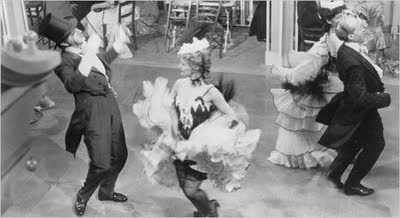
Image from Le Plaisir (Max Ophüls, 1952)

Thanks to The Auteurs Daily, Film Studies For Free heard about the new issue of Film Quarterly (Vol. 63, No. 1, Fall 2009) which comes with a wonderful, freely-accessible article by V.F.Perkins: Reconsideration: Le Plaisir: "The Mask" and "The Model". Its a fabulously illustrated study of Max Ophüls’s 1952 film Le Plaisir, an adaptation of three short stories by Guy de Maupassant: Le Masque, La Maison Tellier, and Le Modèle.

Other freely-accessible items in this issue include: Rob White, Editors Notebook: Against Nature; Joshua Clover, Marx and Coca-Cola: The Future in Labor; Danny Birchall, Talking Point: The Avant-Garde Archive Online
Read More..

Minggu, 09 Maret 2014


Bodies Politic/Body Politics
"Your body is a microcosm of all existence." – On Michelle LeBruns Death: A Love Story: Bodies Politic/Body Politics: The Political and the Personal in Contemporary Film Essays by Matt Brennan
Film Studies For Free continues to catch up with Augusts bumper crop of new online journal issues. Over the weekend, it has been thoroughly enjoying the lively and eclectic brilliance of Bright Lights Film Journals latest offering of very savvy, and sometimes sassy, articles.

They may not be peer reviewed in the strict scholarly sense, but film studies academics and cinephiles will miss these at their peril.

The entire table of contents for Issue 73 is thus reproduced below. And dont miss Bright Lights After Dark, BLFJs fabulous film blog for further, essential, movie musings. 

Bright Lights Film Journal, August 2011 | Issue 73

From the Editor
Features
Articles
Movies
Television
Short Features
Stars
Directors
Festivals
Columns
Books
  • They Live, by Jonathan Lethem. Reviewed by Chad Trevitte

Read More..

Sabtu, 08 Maret 2014

Image from Film Socialisme (Jean-Luc Godard, 2010). You can read Samuel Bréans SOC essay about this film here.
Film Studies For Free is delighted to convey to its readers that a great new issue of Senses of Cinema has just been published. Its a bumper issue with lots of interest.

It is a timely reminder of just what a valuable publication this online journal is. To which end, SOC launched a Support Senses campaign a little while ago. FSFF thinks that if you regularly visit this journal, if you value what it does, perhaps you might like to consider making a small (or large!) donation, perhaps the cost of a monthly commercial film magazine, as a guideline, for starters.

Senses of Cinema, Issue 60, 2011 
Great Directors:
CTEQ Annotations:
Fred Schepisi Dossier:
Book Reviews:
Film Festival Reports:
Read More..

Minggu, 02 Maret 2014

I cannot believe that we are almost at the end of May! 21 Secrets has been going strong now for almost two months, and it is a beautiful thing. A magical experience to say the least. I have a secret to share with you, but you will have to wait until June 1. For now, registration is still open at 21 Secrets! Click the button below to register!


Read More..

Jumat, 28 Februari 2014

On October 10th, 2010, Ubuntu 10.10 (Maverick Meerkat) will become the thirteenth release of the Ubuntu operating system. of late Ubuntu team has released it’s second alpha to get a early look . Most notable additions are Linux kernel 2.6.35 with enhanced security , Btrfs file system , new Ubiquity (ubuntu installer)  and also  few UI changes , of course for it’s still in  alpha stage many more changes and renovations can be  expected in upcoming releases.

Release schedule

August 5th, 2010 - Alpha 3 release;
September 2nd, 2010 - Beta release;
September 30th, 2010 - Release Candidate;
October 10th, 2010 - Final release of Ubuntu 10.10.

Revamped Ubiquity

ubuntu1010installer-small_001

ubuntu1010installer-small_002


 Btrfs filesystem in Ubuntu 10.10 Alpha 2

ubuntu1010alpha2-small_003b


Ubuntu Software Center has been updated to version 2.1.4

ubuntu1010alpha2-small_0033


A notification about the current status of Canonicals Ubuntu One service has been implemented in Nautilus

ubuntu1010alpha2-small_003

Download Ubuntu 10.10 alpha 2 (32 bit | 64 bit)

Read More..

Minggu, 23 Februari 2014

I loved the way that the Round Robin art journal turned out, but had made some (small) errors with the binding and knew I could perfect it. I guess that is what I get for being a perfectionist. But it did allow me to use some of my other recent finds, and make a journal to be used for my new art journal (since I only have 3 pages left in the current one)!

I used the same idea again, but was able to make the binding neater, and opted for using buttons instead of grommets. I also planned ahead and included a closure on this one!


Read More..

Rabu, 08 Januari 2014

It is estimated that approximately 41% of revenue, close to $53 billion, is "lost" in software piracy. This number is totally misleading since it assumes that all the people who knowingly or unknowingly pirated software would have bought the software at the published price had they not pirated it. RIAA also applies the same nonsense logic to blow the music piracy number way out of proportion. The most people who pirate software are similar to the people who pirate music. They may not necessarily buy software at all. If they cant pirate your software, they will pirate something else. If they cant do that, they will find some other alternative to get the job done.

Fortunately, some software companies understand this very well and they have a two-pronged approach to deal with this situation: prevent large scale piracy and leverage piracy when you cant prevent it. If an individual has access to free (pirated) software, as a vendor, youre essentially encouraging an organic ecosystem. The person who pirated your software is more likely to make a recommendation to continue using it when he/she is employed by a company that cannot and will not pirate. This model has worked extremely well. What has not been working so well and what the most on-premise vendors struggle with is the unintentional license usage or revenue leakage. Customers buy on-premise software through channels and deploy to large number of users. Most on-premise software are not instrumented to prevent unintentional license usage. The license activation, monitoring, and compliance systems are antiquated in most cases and cannot deal with this problem. This is very different than piracy because the most corporations, at least in the western world, that deploy the on-premise software want to be honest but they have no easy way to figure out how many licenses have beed used.

In the SaaS world, this problem goes away. The cloud becomes the platform to ensure that the subscriptions are paid for and monitored for continuous compliance. You could argue that there is no license leakage since there are no licenses to deal with. But, what about piracy? Well, theres no piracy either. This is a bad thing. Even though a try before buy exists, theres no organic grass-roots adoption of your software (as a service) since people cant pirate. In many countries where software piracy is rampant, the internet access is not ubiquitous and bandwidth is still limited. This creates one more hurdle for the people to use your software.

So, what does this mean to you?

SaaS ISV: It is very important for you to have a freemium model that is country-specific and not just a vanilla try-before-buy. You need to get users start using your service for free early on and make it difficult for them to move away when they work for someone who can pay you. Even though youre a SaaS company, consider a free on-premise version that provides significant value. Evernote is a great example of this strategy. It shouldnt surprise you that people still download software, pirated or otherwise. Dont try to change their behavior, instead make your business model fit to their needs. As these users become more connected and the economics work in their favor, they will buy your service. Its also important to understand that the countries where piracy is rampant, people are extremely value conscious.

On-premise ISV: Dont lose your sleep over piracy. Its not an easy problem to solve but do make sure that youre doing all you can to prevent it. Consider a freemium business model where youre providing a clean and free version to your users. If the users can get enough basic value from a free version, they are less likely to pirate a paid version. What you absolutely must do is to fix your license management systems to prevent unintentional license usage. Help yourself by helping your customers who want to be honest. The cloud is a great platform to collect, clean, and match all the license usage data. You have a little or no control over customers landscapes but you do have control over your own system in the cloud as long as theres a little instrumentation embedded in your on-premise software and a hybrid architecture that connects your on-premise software to the cloud. In nutshell you should be able to manage your licenses the way SaaS companies manage their subscriptions. There are plenty of other benefits of this approach including the most important benefit being a SaaS repository of your customers and their landscapes. This would help you better integrate your future SaaS offerings and acquisitions as well as third-part tools that you might use to run your business.
Read More..
FOOTER